
The Well
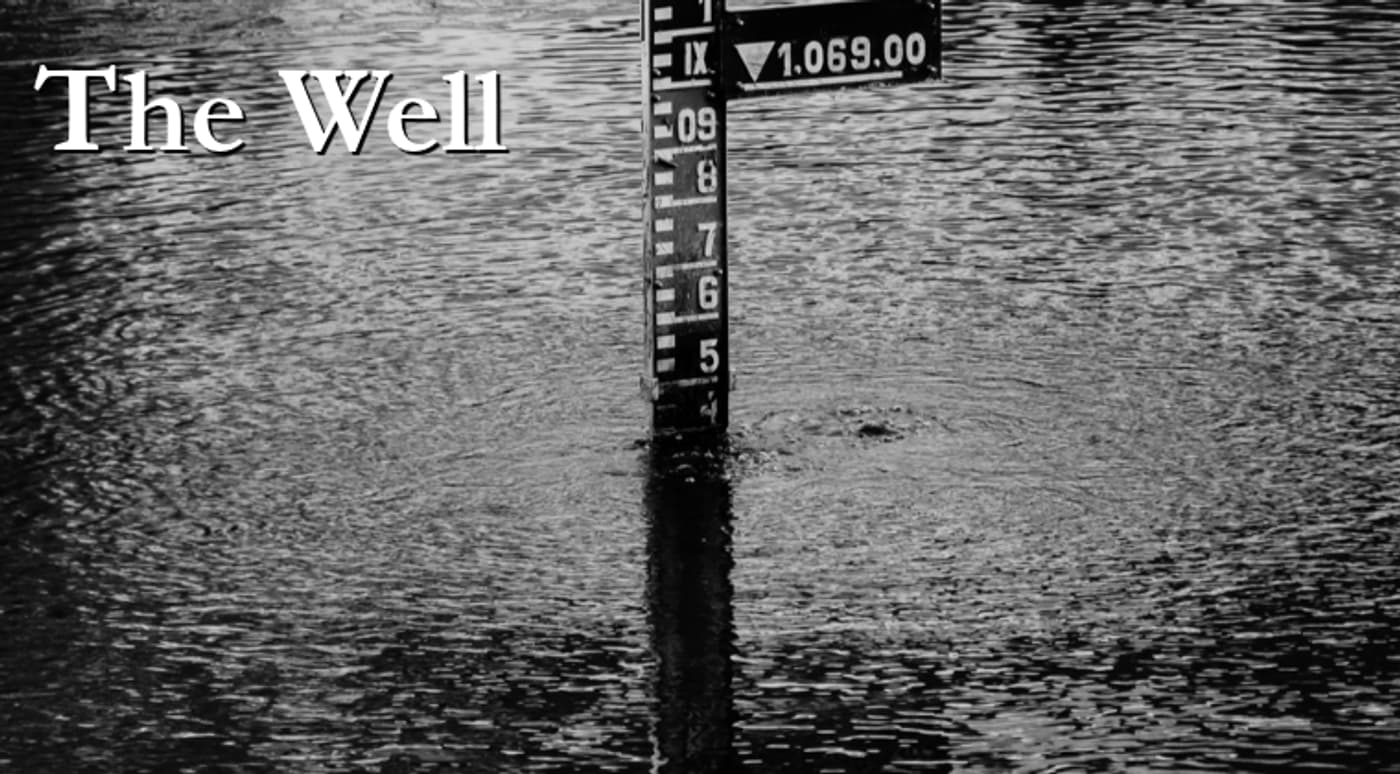
The Well
This chapter asks a question most professionals have never been invited to answer honestly:
how full is your well right now?
Not at your best. Not on a good week. Right now, today, before this day begins.
What follows is an honest examination of what your energy costs, what replenishes it, and what becomes possible when you tend it with the same care you give everything else.
“Attention is the rarest and purest form of generosity.”
Simone Weil
The Concept
Energy as a Finite Resource
You are not an inexhaustible resource.
This should be obvious. And yet professional culture - and the identity many people in human-facing work have built around their work - operates on the implicit assumption that dedication means limitless availability. That the empty tank at the end of the day is something to be proud of. It is not. It is something to be examined.
Energy - physical, emotional, cognitive, moral - is finite. Every person begins each day with a quantity of it, shaped by sleep, by health, by the emotional weather of the life being lived outside work. It is spent on everything the day asks for, and it does not replenish instantly. When it runs out, it is gone - until rest, connection, meaning, and time bring it back.
Think of it this way. Imagine you begin each day with ten units of energy - ten spoons, ten coins, whatever works for you. Each demand on your attention, your emotion, your body, your moral reasoning costs something. A complex decision. A distressed family. A colleague conflict. A person in pain. Each one draws from the same finite reserve. The working day alone would be enough to empty most people in human-facing work. But the day is never the whole story.
Your well is being drawn from before you arrive at work. Before the first meeting, before the first person in your care. The child who was unwell overnight. The parent whose health is declining. The relationship quietly under strain. The financial pressure sitting in the background like a low hum. None of these stop at the workplace door - they travel with you, drawing from the same reserve the people in your care will draw from across the next hours. This is not a flaw in you. It is the reality of being a complete human being who also happens to work in a caring profession.
The fuel gauge check is not self-indulgence. It is situational awareness. Before every day, the honest question is not "am I ready?" - which invites performance - but "where am I actually starting from?" - which invites truth.
Beyond those obvious draws, there are ones so habitual they become invisible: the commute spent ruminating rather than transitioning, the mental load of a household carried silently, the emotional labour of regulating your own responses to difficult people, the background anxiety that never fully quiets, the moral distress of a situation that conflicted with your values and was never processed. These are the drains people in human-facing work are least likely to account for - because they've become so normalised they no longer register as costs. Part of tending the well is making the invisible visible.
The Full Picture
Life Outside Work is a Legitimate Variable
There is a simple practice that costs nothing and changes everything: before your day - in the car park, on the train, in the five minutes before you walk through the door - you check your gauge.
Not to judge yourself, or perform readiness. Simply to know. Am I starting full? Three-quarters? Half? Running low? And if you're running low - what drew from the well before you got here? Can you name it? Not to fix it right now, but to carry it with awareness rather than pretending it isn't there.
This matters for two reasons. The first is self-protection: the practitioner who knows they're starting at half capacity can be more deliberate about where they spend energy during the day, more selective about what they take on beyond their direct responsibilities. The second is self-compassion: the practitioner who arrives already depleted and doesn't know it will interpret their struggle as failure - wondering why today feels harder, why patience is shorter - and blame themselves for something that is simply the mathematics of a finite resource meeting an already significant demand. Knowing your starting level doesn't change the day. But it changes how you understand yourself within it.
It's worth naming, without softening, the weight people in human-facing work carry outside it too. These professions attract people with a particular orientation toward others - which means the practitioner who gives everything at work is often also the one their ageing parent calls first, the one their friends turn to in crisis, the one their partner relies on to be the steady one. This is an enormous privilege and an enormous weight, and it draws from exactly the same well. There is no formula for balancing these competing claims - only an honest accounting that they are real, that they cost something, and that pretending they don't is not strength. It is a slow leak in a well that needs tending.
One of the most practical expressions of fuel gauge awareness is the capacity to communicate simply and honestly with trusted colleagues - not a full disclosure of your personal circumstances, just an honest signal, where appropriate, with the right person.
"I'm a bit flat today - nothing serious, just one of those weeks."
This is not weakness. It is the kind of honest professional communication that builds real team trust. The colleague who knows you're running low can offer small supports without being asked. The team that knows how to read each other's gauge is a safer and more sustaining team to work in. The alternative - performing fullness when running on empty - costs everyone: you the support you might have received, your colleagues the information they needed to understand your responses, and the team the authenticity that genuine connection requires.
The Culture Problem
When Depletion Becomes Identity
There is a culture in many human-facing professions that has made exhaustion a marker of dedication. The practitioner who stays late, skips breaks, and is visibly depleted at the end of every day is admired - their sacrifice noted, their commitment beyond question. The practitioner who leaves on time, takes their breaks, and arrives home with something left can feel the implicit judgement: are they working hard enough? Do they really care?
This is one of the most damaging cultural patterns in human-facing work. Depletion is not dedication. It is the predictable result of a finite resource being drawn from without replenishment. A car that runs out of fuel has not demonstrated commitment to the journey - it has simply run out of fuel.
The practitioner who manages their energy wisely is not less committed. They are more sustainable - and sustainability, across a long career, is not a luxury. The practitioner who burns out at year eight and leaves has given everything. The practitioner who is still present, still engaged, still genuinely caring at year twenty-five has given more. Not more in any single day - but more in total.
Professional culture in human-facing work rarely gives people explicit permission to: leave on time without guilt, take breaks without apology, say no to additional demands when running low, acknowledge that they're affected by what they witness, need replenishment as much as the people they serve.
This chapter is that permission - grounded in evidence, framed as a professional responsibility rather than a personal preference. You are allowed to tend your well. Not instead of caring for the people in your care. Because of it.
“It is not that we have a short time to live, but that we waste a great deal of it.”
Seneca
The Philosophy
On How We Spend Ourselves
The Roman Stoic philosopher Seneca wrote, in the first century CE, one of the most direct examinations of how human beings spend their finite resources. His argument was not really about time, though that's how it's usually read - it was about attention and energy. We are not given too little of either, he argued. We waste what we're given, spending it on things that aren't ours to carry, on the performance of availability rather than the genuine exercise of presence.
"It is not that we have a short time to live, but that we waste a great deal of it."
For people in human-facing work, the reframe is immediate. You do not have too little energy. But you may be spending it on things not worth the cost. Seneca's counsel is not to give less. It is to give more deliberately - to know where your energy goes, and to protect what cannot be recovered once it is spent.
The French philosopher Simone Weil wrote that attention - genuine, full, unhurried attention - is the rarest and purest form of generosity available to a human being. Real attention requires the suspension of the self: to truly attend to another person without the interference of your own preoccupations and exhaustion, you must bring yourself fully to the encounter. And that fullness is not automatic. It is a resource. It can be depleted.
The practitioner who arrives at someone's side carrying an overfull well - distracted, depleted, anxious about what comes next - may offer competent care, may do everything correctly. But the person in their care will feel the absence of full presence. Tending the well is not selfishness. It is the precondition of the most important thing this work offers: the experience of being truly seen by another human being who has the capacity to see you.
The writer Oliver Burkeman makes an argument that applies directly here: the failure to acknowledge limits does not make us more productive or generous. It makes us less honest, more anxious, and ultimately less effective. We resist the reality of finitude because acknowledging it feels like failure - if I admit I cannot be everything to everyone, I am somehow not enough. But the opposite is true. The practitioner who acknowledges their limits clearly is not diminished by that honesty. They are freed by it - able to give what they actually have, rather than borrowing against a future that will eventually call in the debt.
The Research
What Depletion Actually Costs
There is a name for what happens when the emotional demands of caring work exceed a person's capacity to process and recover from them: compassion fatigue, the cost of caring. It's distinct from burnout, though the two often co-occur. Burnout is the result of chronic workplace stress - workload, lack of autonomy, organisational dysfunction. Compassion fatigue is more specific: what happens when exposure to suffering, day after day, outpaces the capacity to recover from it.
The symptoms are recognisable to most experienced people in this work: reduced empathy, emotional numbness, intrusive thoughts about the people in your care, difficulty separating work from home life, a growing sense of hopelessness or cynicism. It is not a character flaw or a sign of insufficient commitment. It is a predictable response to an unsustainable energy equation - the well was drawn from faster than it was replenished. That is all. The protective factor consistently identified in the research is not toughness or emotional distance. It is self-awareness and intentional replenishment.
The professional implications are well-documented. Research on decision fatigue - the deterioration of decision quality after sustained periods of decision-making - shows that judgement degrades measurably over the course of a day, particularly in practitioners who begin already depleted. And Linda Aiken's landmark studies, across multiple countries, found that burnout in caring professions was directly associated with lower satisfaction among those being cared for, higher rates of care omission, and increased risk of poor outcomes. The depleted practitioner is not just personally unwell. They are a professional risk factor.
This is not to induce guilt. It is to reframe the stakes. Tending your well is a professional responsibility, not a personal indulgence. The practitioner who arrives with genuine capacity - who has slept, processed, replenished - offers something categorically different to the people in their care than one performing presence from an empty place.
The research on what actually replenishes energy is more nuanced than standard self-care messaging suggests. Rest is necessary but not sufficient - sleep restores physical energy but doesn't necessarily address emotional or moral depletion. What the research consistently identifies as genuinely restorative: meaningful connection with people who know and value you outside your professional role, true mental distance from work rather than just physical absence, mastery experiences where you feel capable and engaged, autonomy over at least some of your non-work time, and physical movement the body genuinely enjoys, not exercise as obligation. The common thread is not relaxation. It is aliveness - the reminder that you are more than your professional role.
The Art Of Replenishment
What Actually Works
The first and most important act of replenishment is knowing yourself - specifically. What draws from your well most? What replenishes it most effectively? These answers are individual: what restores one person depletes another, and generic self-care advice, applied without reference to your own particular nature, is ineffective at best.
Some people replenish through solitude, others through company and laughter. Some through physical exertion, others through stillness. Some through creative work, others through being in nature. None of these is more correct than the others. What matters is that you know which is yours, and protect access to it with the same seriousness you'd apply to anything else that matters - sleep, movement, time alone, time with specific people, something creative or spiritual that belongs entirely to you. These are not luxuries or rewards for good behaviour. They are the basic, non-negotiable requirements of a functioning well.
Because here is the thing about non-negotiables: when they are consistently not met, the cost is not just personal. It is borne by every person in your care, every colleague, every person you go home to. The well that is not tended does not just affect you. It affects everyone who draws from it.
Not all replenishment happens outside work, either. Waiting until the end of a long day to begin restoring is often too late - by then the deficit is too large. Micro-replenishment is the practice of finding small moments of genuine restoration within the day itself: the thirty-second conversation that made you both laugh, the colleague connection between tasks, the person who said thank you and meant it, the coffee taken sitting down in five minutes of actual quiet rather than standing over a sink. These moments are the micro-deposits that prevent the well reaching critical levels during the day - but only for the practitioner who notices them and actually lets themselves receive what they offer, rather than moving past them immediately.
One of the most underrated acts of energy management is the transition - the deliberate, conscious move from work-self to home-self that most people rush or skip entirely. The practitioner who drives home replaying the day, arrives distracted, and spends the evening somewhere between two worlds is not resting. They are extending the day in a different location.
The transition doesn't need to be elaborate - five minutes in the car park before driving, a specific playlist for the commute, a ritual of changing clothes that signals to the nervous system: that was there, this is here. The point is intentionality. The day happened. It is done. The next thing deserves your actual presence, not the remainder of a self that is still somewhere else.
The Portrait
The Person Who Tends Their Well
The practitioner who tends their well is not the one who never gets depleted - depletion is inevitable in this work. They are the one who knows when it's happening, understands why, and does something about it before it becomes critical.
They check their gauge before the day begins, not as a performance of self-awareness, but as a quiet, honest habit. They know what they're carrying from home, and adjust accordingly - not their standards, but their self-expectations. During the day they notice the small moments that give back, and actually take their break when they can, rather than spending it on their phone or talking about work. After the day they transition, deliberately - not perfectly, not always, but as a practice. They protect the thing that replenishes them, not as a reward, but as a requirement.
And over time - over years and decades - the well stays viable. It fluctuates. There are seasons where it runs critically low and seasons where it is fuller than expected. But it does not run dry permanently. Because it has been tended.
Sarah's Story
Sarah has worked in oncology care for seventeen years. She chose the specialty deliberately - she wanted to be present for people at the hardest moments of their lives. For the first decade, she was.
By year twelve, something had changed. She was still technically excellent. The people in her care received good care. But something in the quality of her presence had shifted - a slight distance, a going-through-the-motions quality that she noticed in herself before anyone else named it.
She wasn't sleeping well. She had stopped running, which had always been her thing. Her relationship with her husband was functional but thin. She was present at home in the same way she was present at work - technically, but not fully.
A supervisor asked her once, gently, what she did to replenish herself. She couldn't answer immediately. She realised she had stopped asking the question.
She started small. The runs came back first - three mornings a week, non-negotiable. Then the gauge check before each day - five minutes in the car park, honest and quiet. She started leaving on time more often, which felt radical and guilty and then, gradually, just normal.
"I thought I was being selfish. I thought if I had energy left at the end of the day I hadn't given enough. It took me a long time to understand that the energy I was protecting wasn't for me. It was for the next person. And the one after that. And the person I went home to."
Twelve months later her supervisor noted a change. Not in her technical competence - that had always been there. In her presence. She was back in the room in a way she hadn't been for years.
The well had been tended. And it showed.
“The energy I was protecting wasn't for me. It was for the next person. And the one after that.”
Sarah, The Well
The Well
This chapter asks a question most professionals have never been invited to answer honestly:
how full is your well right now?
Not at your best.
Not on a good week.
Right now, today, before this day begins.
What follows is an honest examination of what your energy costs, what replenishes it, and what becomes possible when you tend it with the same care you give everything else.
“Attention is the rarest and purest form of generosity.”
Simone Weil
The Concept
Energy as a Finite Resource
The Well
You are not an inexhaustible resource.
This should be obvious. And yet professional culture - and the identity many people in human-facing work have built around their work - operates on the implicit assumption that dedication means limitless availability. That the good practitioner gives everything. That exhaustion is the evidence of effort. That the empty tank at the end of the day is something to be proud of.
It is not. It is something to be examined.
Energy - physical, emotional, cognitive, moral - is finite. Every person begins each day with a quantity of it. That quantity varies. It is shaped by sleep, by health, by the emotional weather of the life being lived outside work. It is spent on everything the day asks for, and it does not replenish instantly. When it runs out, it is gone - until rest, connection, meaning, and time bring it back.
Think of it this way. Imagine you begin each day with ten units of energy - ten spoons, ten coins, ten whatever works for you. Each demand on your attention, your emotion, your body, your moral reasoning costs something. A complex decision. A distressed family. A colleague conflict. A person in pain. Each one draws from the same finite reserve.
The working day alone would be enough to empty most people in human-facing work. But the day is never the whole story.
What Draws From the Well
The most important thing this chapter asks you to understand is this: your well is being drawn from before you arrive at work.
Before the first meeting. Before the first person in your care. Before you've even walked through the door.
The child who was unwell overnight. The parent whose health is declining and who calls more than they used to. The relationship that is quietly under strain. The financial pressure that sits in the background of everything like a low hum. The friend who is going through something hard and needs you right now. The health concern you haven't had time to follow up. The household that is running on whoever has the most left at the end of the day - which is usually not you.
None of these are small. None of them stop at the workplace door. They travel with you, occupy cognitive and emotional space, draw from the same reserve that the people in your care and your colleagues will draw from across the next hours.
This is not a flaw in you. It is the reality of being a complete human being who also happens to work in a caring profession. The practitioner who pretends otherwise - who performs as if they are full while running on empty - is not more professional. They are less honest, and over time, less sustainable.
The fuel gauge check is not self-indulgence. It is situational awareness. Before every day, the honest question is not "am I ready?" - which invites performance - but "where am I actually starting from?" - which invites truth.
The Invisible Drains
Beyond the obvious draws on energy, there are drains so habitual they become invisible.
The commute spent ruminating rather than transitioning. The mental load of managing a household carried silently and constantly. The emotional labour of regulating your own responses to difficult colleagues or demanding environments. The background anxiety that never fully quiets. The things left unsaid that take energy to hold in. The moral distress of situations that conflicted with your values and were never processed.
These invisible drains are significant. They are also the ones people in human-facing work are least likely to account for - because they have become so normalised they no longer register as costs.
Part of tending the well is making the invisible visible. Noticing not just the large obvious draws on your energy, but the quiet persistent ones that have been running in the background for so long you've forgotten they're there.
The Full Picture
Life Outside Work is a Legitimate Variable
The Fuel Gauge
There is a simple practice that costs nothing and changes everything.
Before your day - in the car park, on the train, in the five minutes before you walk through the door - you check your gauge.
Not to judge yourself. Not to perform readiness or manufacture enthusiasm. Simply to know. To look honestly at where you are starting from today, with the same neutral practicality you would bring to reading a number on a dashboard.
Am I starting full? Three-quarters? Half? Running low?
And if you are running low - what drew from the well before you got here? Can you name it? Not to fix it right now, but to acknowledge it. To carry it with awareness rather than pretending it isn't there.
This matters for two reasons.
The first is self-protection. The practitioner who knows they are starting at half capacity can be more deliberate about where they spend energy during the day. Awareness of how many spoons they are starting with and how many they have left. More selective about what they take on beyond their direct responsibilities. More intentional about the small moments of restoration available even within a demanding day.
The second is self-compassion. The practitioner who arrives already depleted and doesn't know it will interpret their struggle as failure. They will wonder why today feels harder than usual, why patience is shorter, why the thinking feels slower. They will blame themselves for something that is simply the mathematics of a finite resource meeting an already significant demand.
Knowing your starting level doesn't change the day. But it changes how you understand yourself within it.
What People in Human-Facing Work Carry
It is worth naming, without softening, the weight that people in human-facing work carry outside work.
These professions attract people with a particular orientation toward others - people who care deeply, who feel acutely, who show up for the people in their lives the same way they show up for those in their care. This is not a coincidence. It is the same quality, expressed in different contexts.
Which means the practitioner who gives everything at work is often also the one holding the most at home. The one their ageing parent calls first. The one whose children know will always find a way. The one their friends turn to in crisis. The one whose partner relies on them to be the steady one.
This is an enormous privilege and an enormous weight. And it draws from exactly the same well.
There is no formula for how to balance these competing claims on your energy. What this chapter offers is not a solution but an honest accounting - the recognition that these claims are real, that they cost something, and that pretending they don't is not strength. It is a slow leak in a well that needs tending.
Communicating Without Oversharing
One of the most practical expressions of fuel gauge awareness is the capacity to communicate simply and honestly with trusted colleagues.
Not a full disclosure of your personal circumstances. Not an explanation or an apology. Simply - where appropriate, with the right person - an honest signal.
"I'm a bit flat today - nothing serious, just one of those weeks."
This is not weakness. It is the kind of honest professional communication that builds real team trust. The colleague who knows you're running low can offer small supports without being asked - a hand with a task, a moment of levity, a check-in at the end of the day. The team that knows how to read each other's gauge is a safer and more sustaining team to work in.
The alternative - the performance of fullness when running on empty - costs everyone. It costs you the support you might have received. It costs your colleagues the information they needed to understand your responses. And it costs the team the authenticity that genuine connection requires.
The Culture Problem
When Depletion Becomes Identity
The Badge of Exhaustion
There is a culture in many human-facing professions - and in healthcare and education and social care more broadly - that has made exhaustion a marker of dedication.
The practitioner who stays late. Who skips breaks. Who gives everything and arrives home with nothing. Who is visibly depleted at the end of every day. This person is admired. Their sacrifice is noted. Their commitment is beyond question.
And the practitioner who leaves on time, takes their breaks, and arrives home with something left? They can feel the implicit judgement. Are they working hard enough? Do they really care?
This is one of the most damaging cultural patterns in human-facing work. And it is worth examining directly.
Depletion is not dedication. It is the predictable result of a finite resource being drawn from without replenishment. A car that runs out of fuel has not demonstrated commitment to the journey. It has simply run out of fuel.
The practitioner who manages their energy wisely - who protects their well with the same care they extend to the people they serve - is not less committed. They are more sustainable. And sustainability, across a long career, is not a luxury. It is the most important professional attribute anyone in human-facing work can develop.
The practitioner who burns out at year eight and leaves has given everything. The practitioner who is still present, still engaged, still genuinely caring at year twenty-five has given more. Not more in any single day - but more in total, and more of the quality that this work actually requires.
The Permission This Culture Doesn't Give
Professional culture in human-facing work rarely gives people explicit permission to:
Leave on time without guilt. Take breaks without apology. Say no to additional demands when running low. Acknowledge that they are affected by what they witness. Need replenishment as much as the people they serve.
This chapter is that permission - in writing, grounded in evidence, framed as a professional responsibility rather than a personal preference.
You are allowed to tend your well. Not instead of caring for the people in your care. Because of it.
“It is not that we have a short time to live, but that we waste a great deal of it.”
Seneca
The Philosophy
On How We Spend Ourselves
Seneca - On the Shortness of Life
The Roman Stoic philosopher Lucius Annaeus Seneca wrote, in the first century CE, what remains one of the most direct examinations of how human beings spend their finite resources.
His argument was not about time - though that is how it is usually read. It was about attention and energy. We are not given too little of either, Seneca argued. We waste what we are given. We spend it on things that are not ours to carry, on demands that do not deserve what they cost us, on the performance of availability rather than the genuine exercise of presence.
"It is not that we have a short time to live, but that we waste a great deal of it."
For people in human-facing work, the reframe is immediate. You do not have too little energy. But you may be spending it on things that are not worth the cost - the background rumination, the performance of fullness, the carrying of things that could be put down, the failure to replenish what is being taken.
Seneca's counsel is not to give less. It is to give more deliberately - to know where your energy goes, to choose consciously, and to protect what cannot be recovered once it is spent.
Simone Weil - Attention as the Rarest Gift
The French philosopher Simone Weil wrote that attention - genuine, full, unhurried attention - is the rarest and purest form of generosity available to a human being.
Her insight was this: real attention requires the suspension of the self. To truly attend to another person - to hear them, see them, receive them without the interference of your own preoccupations, agendas, and exhaustion - you must bring yourself fully to the encounter. And that fullness is not automatic. It is a resource. It can be depleted.
For human-facing work, this is not abstract. The practitioner who arrives at someone's side carrying the weight of an overfull well - distracted by the morning's argument, depleted by a sleepless night, anxious about what comes after this room - is not able to offer genuine attention. They may offer competent care. They may do everything correctly. But the person in their care will feel the absence of full presence. And the practitioner will know, somewhere, that they gave less than they could have.
Tending the well is not selfishness. It is the precondition of the most important thing human-facing work offers: the experience of being truly seen by another human being who has the capacity to see you.
Oliver Burkeman - The Finite Life
The contemporary writer Oliver Burkeman, in his work on time and human finitude, makes an argument that applies directly to energy management in human-facing work: the failure to acknowledge limits does not make us more productive or more generous. It makes us less honest, more anxious, and ultimately less effective.
His central insight is that we resist the reality of finitude because acknowledging it feels like failure. If I admit that I cannot do everything - cannot be everything to everyone, cannot give endlessly without cost - then I am somehow not enough.
But the opposite is true. The practitioner who acknowledges their limits clearly - who knows their well, tends it honestly, and gives from a place of genuine capacity rather than performance - is not diminished by that honesty. They are freed by it. They can give what they actually have, rather than borrowing against a future that will eventually call in the debt.
The Research
What Depletion Actually Costs
Compassion Fatigue
There is a name for what happens when the emotional demands of caring work exceed a person's capacity to process and recover from them. Researchers call it compassion fatigue - the cost of caring. It is distinct from burnout, though the two often co-occur.
Burnout is the result of chronic workplace stress - workload, lack of autonomy, organisational dysfunction. Compassion fatigue is more specific: it is what happens when that exposure to suffering - day after day, person after person - outpaces the person's capacity to recover from it.
The symptoms are recognisable to most experienced people in human-facing work, often from personal experience: reduced empathy, emotional numbness, intrusive thoughts about the people in your care, difficulty separating work from home life, a growing sense of hopelessness or cynicism, physical exhaustion disproportionate to the workload.
What is critical to understand is that compassion fatigue is not a character flaw or a sign of insufficient commitment. It is a predictable physiological and psychological response to an unsustainable energy equation. The well was drawn from faster than it was replenished. That is all.
The protective factor consistently identified in compassion fatigue research is not toughness or emotional distance. It is self-awareness and intentional replenishment - knowing the state of your well, and tending it with the same seriousness you would apply to any other significant risk factor.
What Depletion Looks Like Professionally
The professional implications of depletion in human-facing work are well-documented and serious.
Research on decision fatigue - the deterioration of decision quality after sustained periods of decision-making - shows that judgement degrades measurably over the course of a day, particularly in practitioners who begin already depleted. Studies examining error rates, reasoning quality, and safety incidents consistently find elevated risk in the later hours of long days and in practitioners reporting high levels of emotional exhaustion.
The empathy research is equally clear. Linda Aiken's landmark studies across multiple countries found that burnout in caring professions - driven substantially by emotional depletion - was directly associated with lower satisfaction among those being cared for, higher rates of care omission, and increased risk of poor outcomes. The depleted practitioner is not just personally unwell. They are a professional risk factor.
This is not to induce guilt. It is to reframe the stakes. Tending your well is not a personal indulgence. It is a professional responsibility. The practitioner who arrives with genuine capacity - who has slept, who has processed, who has replenished - offers something categorically different to the people in their care than the practitioner who is performing presence from an empty place.
The Replenishment Research
The research on what actually replenishes energy in human-facing work is more nuanced than the standard self-care messaging suggests.
Rest is necessary but not sufficient. Sleep restores physical energy but does not necessarily address emotional or moral depletion. The practitioner who sleeps eight hours but wakes to an unresolved conflict, a pile of undone things, and a pervasive sense of dread has rested but not replenished.
What the research consistently identifies as genuinely restorative:
Meaningful connection - time with people who know and value you outside your professional role. True mental distance from work - genuine disengagement, not just physical absence. Mastery experiences - activities outside work in which you feel capable and engaged. Control - autonomy over at least some aspects of your non-work time. Physical movement - not exercise as obligation, but movement that the body genuinely enjoys.
The common thread is not relaxation. It is aliveness. The activities that replenish are the ones that remind you that you are more than your professional role - that you are a full human being with interests, capacities, relationships, and a life that belongs to you.
The Art Of Replenishment
What Actually Works
Knowing Your Own Well
The first and most important act of replenishment is knowing yourself.
Not in a general way. Specifically. What draws from your well most significantly? What replenishes it most effectively? These answers are individual - what restores one person depletes another, and the practitioner who follows generic self-care advice without reference to their own particular nature will find it ineffective at best and demoralising at worst.
Some people replenish through solitude and quiet. Others through company and laughter. Some through physical exertion. Others through stillness. Some through creative work. Others through being in nature. Some through depth of connection with one or two people. Others through the breadth of a social life.
None of these is more correct than the others. What matters is that you know which is yours - and that you protect access to it with the same seriousness you would apply to anything else that matters.
Micro-Replenishment Within the Day
Not all replenishment happens outside work. And waiting until the end of a long day to begin restoring is often too late - by then the deficit is too large and the capacity to replenish is itself compromised.
Micro-replenishment is the practice of finding small moments of genuine restoration within the day itself. These are not breaks from the work - they are the human moments within it that give back as well as take.
The thirty-second conversation with someone in your care that made both of you laugh. The moment of genuine connection with a colleague between tasks. The person who said thank you and meant it. The moment where your instinct was right and the outcome was good. The coffee taken sitting down, in five minutes of actual quiet, rather than standing over a sink.
These moments are not trivial. They are the micro-deposits that prevent the well from reaching critical levels during the day. The practitioner who notices them - who allows themselves to actually receive what these moments offer rather than moving past them immediately - is managing their energy actively rather than passively.
The Non-Negotiables
Every person in human-facing work, with honest reflection, knows what their well requires. The things that, when absent for too long, make everything harder. The things whose absence they notice in their mood, their patience, their capacity.
These are the non-negotiables - not luxuries, not rewards for good behaviour, but the basic requirements of a functioning well.
For some it is sleep, protected with genuine seriousness. For others it is movement. For others it is time alone. For others it is time with specific people. For others it is something creative, something physical, something spiritual, something that belongs entirely to them.
The question worth sitting with is: do you know what yours are? And are you protecting them - not when it's convenient, but as a consistent, non-negotiable part of how you live?
Because here is the thing about non-negotiables. When they are consistently not met, the cost is not just personal. It is borne by every person in your care, every colleague you work alongside, every person you go home to. The well that is not tended does not just affect you. It affects everyone who draws from it.
The Transition
One of the most underrated acts of energy management available to people in human-facing work is the transition - the deliberate, conscious move from work-self to home-self that most people rush or skip entirely.
The practitioner who drives home replaying the day, arrives distracted, snaps at their children because they are still mentally at work, and spends the evening somewhere between two worlds is not resting. They are extending the day in a different location.
The transition is the practice of deliberately closing one context and opening another. It does not need to be elaborate. It might be five minutes in the car park before driving. A specific playlist for the commute. A ritual of changing clothes that signals to the nervous system: that was there, this is here.
The point is intentionality. The day happened. It is done. The next thing deserves your actual presence - not the remainder of a self that is still somewhere else.
The Portrait
The Person Who Tends Their Well
What It Looks Like
The practitioner who tends their well is not the one who never gets depleted. Depletion is inevitable in this work. It is the nature of caring for people in their most vulnerable moments.
The practitioner who tends their well is the one who knows when depletion is happening, understands why, and does something about it before it becomes critical.
They check their gauge before the day begins. Not as a performance of self-awareness, but as a quiet, honest habit. They know what they're carrying from home. They know what the night before cost them. They adjust accordingly - not their standards, but their self-expectations. They give what they have rather than performing what they don't.
During the day they notice the small moments that give back. They take their break. Not always - human-facing work is rarely that accommodating - but when they can, they actually take it, actually rest in it, rather than spending it on their phone or talking about work.
After the day they transition. Deliberately. They leave the work at work - not perfectly, not always, but as a practice. They protect the thing that replenishes them - the run, the dinner with their partner, the hour of complete quiet, the call with the friend who makes them laugh. Not as a reward. As a requirement.
And over time - over years and decades - the well stays viable. It fluctuates. There are seasons where it runs critically low and seasons where it is fuller than expected. But it does not run dry permanently. Because it has been tended.
Sarah's Story
Sarah has worked in oncology care for seventeen years. She chose the specialty deliberately - she wanted to be present for people at the hardest moments of their lives. For the first decade, she was.
By year twelve, something had changed. She was still technically excellent. The people in her care received good care. But something in the quality of her presence had shifted - a slight distance, a going-through-the-motions quality that she noticed in herself before anyone else named it.
She wasn't sleeping well. She had stopped running, which had always been her thing. Her relationship with her husband was functional but thin. She was present at home in the same way she was present at work - technically, but not fully.
A supervisor asked her once, gently, what she did to replenish herself. She couldn't answer immediately. She realised she had stopped asking the question.
She started small. The runs came back first - three mornings a week, non-negotiable. Then the gauge check before each day - five minutes in the car park, honest and quiet. She started leaving on time more often, which felt radical and guilty and then, gradually, just normal.
"I thought I was being selfish. I thought if I had energy left at the end of the day I hadn't given enough. It took me a long time to understand that the energy I was protecting wasn't for me. It was for the next person. And the one after that. And the person I went home to."
Twelve months later her supervisor noted a change. Not in her technical competence - that had always been there. In her presence. She was back in the room in a way she hadn't been for years.
The well had been tended. And it showed.
“The energy I was protecting wasn't for me. It was for the next person. And the one after that.”
Sarah, The Well
© 2026 Glenn F. Free to read and share. Please ask before republishing.